A good brief is not a long form. It is five decisions only you can make, written down before the first meeting.
Most web projects that run late do not run late in design or in code. They run late waiting for a decision: what to say, to whom, with which copy, with which photographs.
We put it this way in what a custom website costs: a project waiting on copy is not waiting on the studio, it is stopped, and usually for weeks. A brief exists so that does not happen.
This guide is for anyone with a business in Venezuela or Latin America who is about to ask for a website. What to prepare, which decisions are yours, and what a good studio will ask you back.
What a visitor has to understand
Start with one sentence. Not the slogan: what someone must have understood by the time they close the tab. If it does not fit in a sentence, the design has nothing to organise itself around.
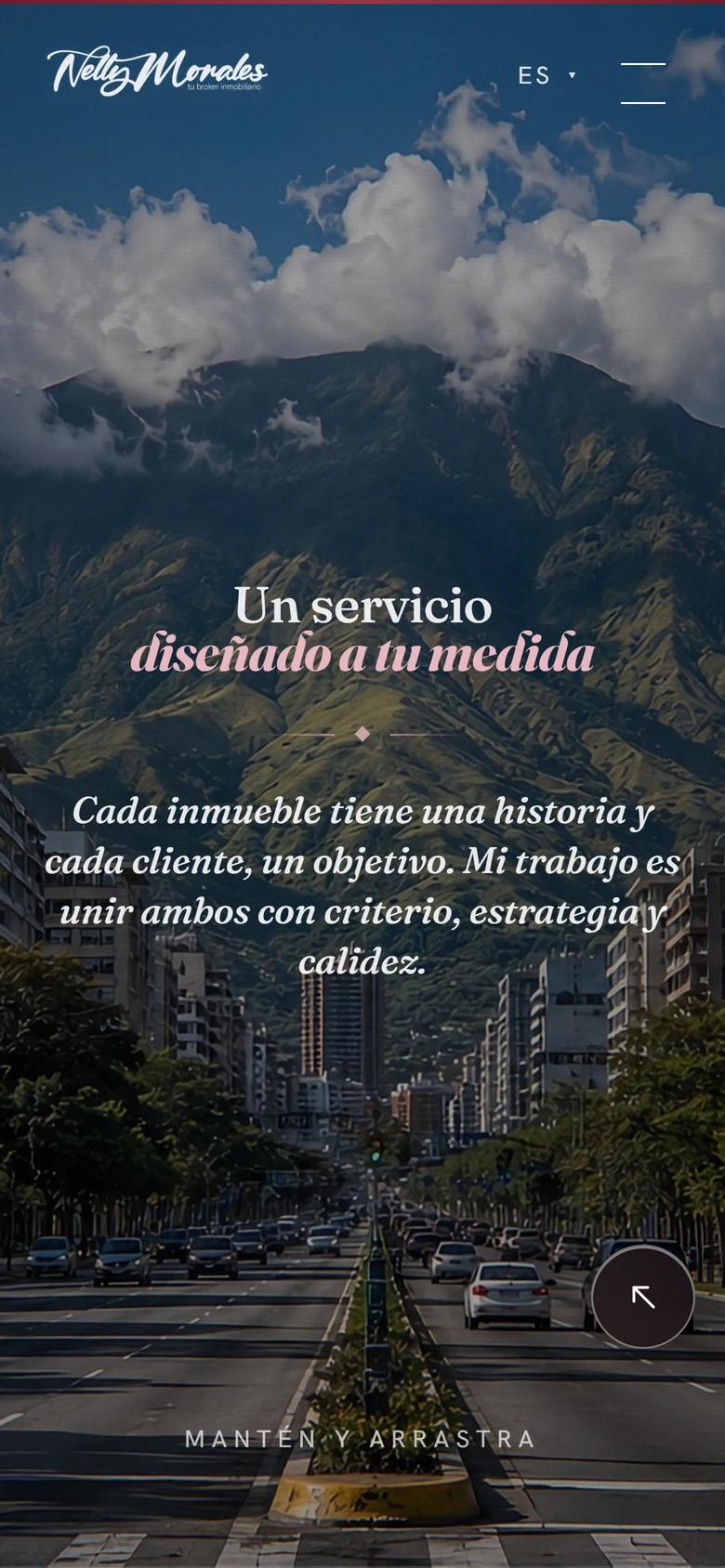
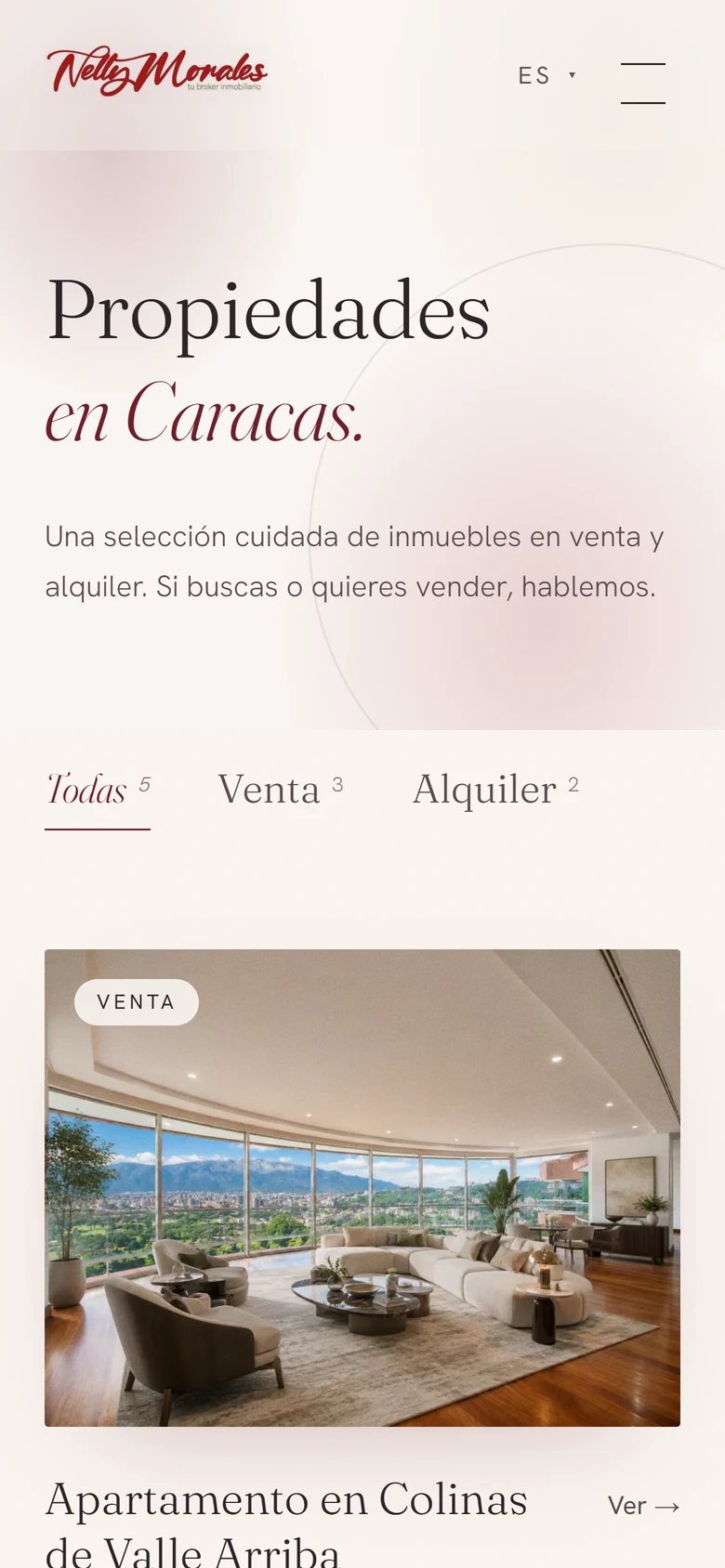
Two examples from our work. The site of Nelly Morales, a real estate professional in Caracas, had to sell trust before volume of listings, which is why it opens on her and not on a search box. Eliana Miliani's starts from the line her site introduces her with: presence you notice, management you don't.
In both, that sentence decided the order of the page, the typefaces and even the colour. That is why it comes first in the brief.
What should the first line of a website brief say?
What a person must have understood when they leave the site, in one sentence. It is not the slogan or the list of services: it is the idea everything else is arranged around. On Nelly Morales's website, for example, that idea was selling trust before volume of listings, so the home page introduces the person before the catalogue.
Who it is for, and in which languages
Who for. Describe the person who buys, not the one you wish would. What they know before they arrive, which device they use, and what makes them hesitate. If your clients come from Instagram on a phone, that decides more than any design reference.
Which languages. Decide at the start, not later. A second language changes the site's addresses, its layout and sometimes its typefaces. Nelly Morales's site reads in five languages, Arabic included: the layout mirrors right to left and each script has a font of its own. That is not something you bolt on at the end. We go through it step by step in a website in two languages without losing rankings.
What already exists
Take stock before the first meeting. What you already have saves work; what you think you have and do not, costs time.
- The brand: a vector logo, colours and typefaces, if there are any. Nelly Morales's site was built around a logo that already existed. If you have no brand, it can be born with the site, but that is another job with another budget; see a logo is not a brand system.
- The photographs: which are yours and who holds the rights. A stock photo seen on ten other sites does not introduce your business.
- The copy: who writes it and when it will be ready. It delays more projects than anything else.
- The domain and hosting: whose name they are in and who has access. It seems a detail until the day something has to change.
- The old site: which pages get visits and from where. If their addresses change, they need redirects.
Old addresses are not thrown away. When we retire pages on this very site, their addresses keep answering and lead to the page that replaced them. A link someone saved a year ago should still go somewhere.
What the site has to do
Showing information is cheap; receiving it is expensive. Before talking about design, write down what the site has to do, as verbs:
- Explain: what you do, for whom, and why you.
- Convince: cases, examples, real proof. Nothing invented.
- Take enquiries: by form, by email or by WhatsApp.
- Sell or book: payments, appointments, stock.
- Be edited: what you will change yourself without calling anyone.
An example of contact. On Nelly Morales's site, the form sends nothing to a server: it opens WhatsApp with the message already written from what was filled in. For a business that already answers on WhatsApp, that is one less part to maintain.
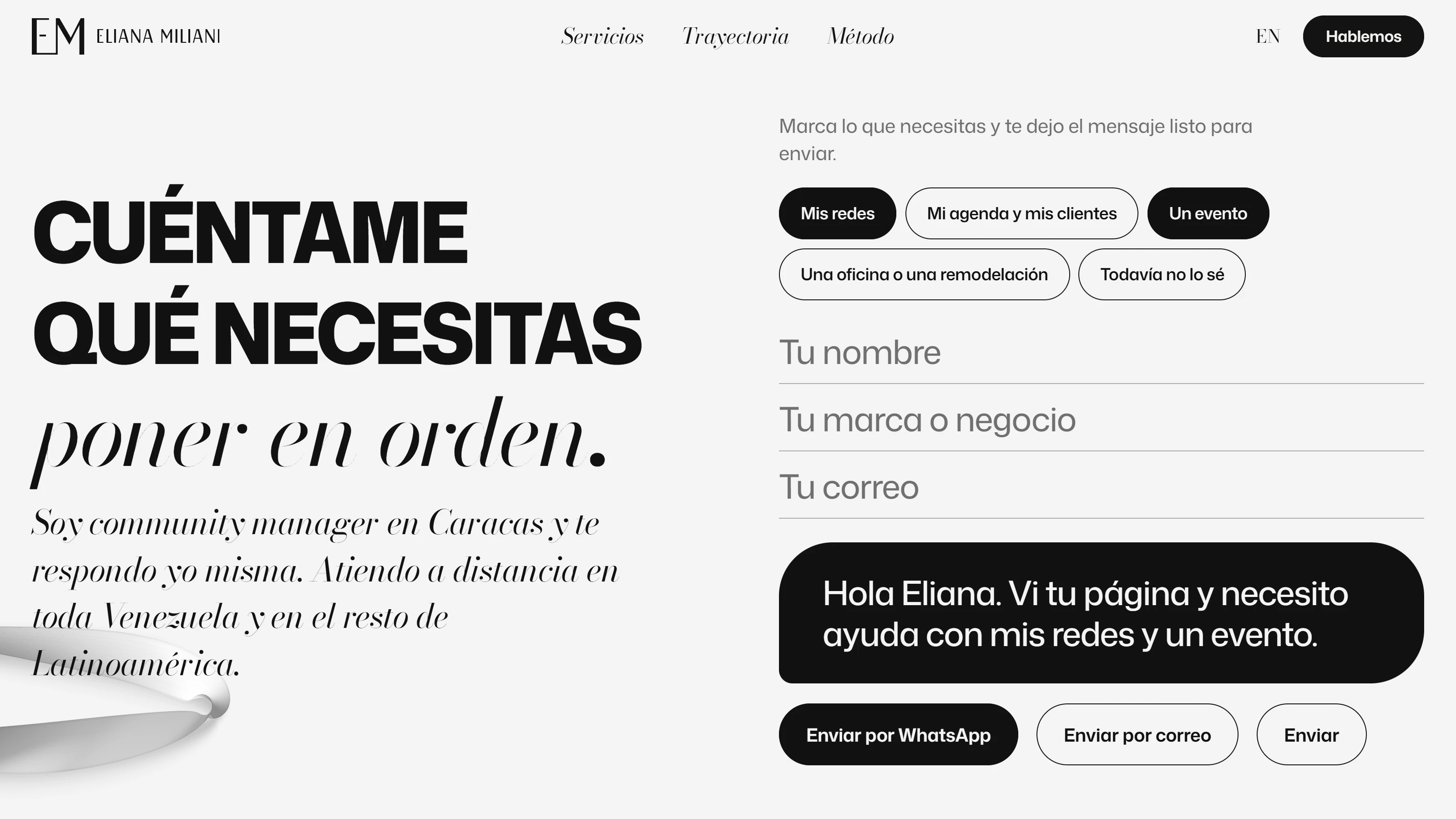
Another that helps people write. Eliana Miliani's site drafts the first message while the visitor ticks what they need, then lets them choose WhatsApp, their own email or sending from the site. Someone who does not know how to start a message gets it started.
An example of something edited. On Nelly Morales's site, each property is a nineteen-field form in a content studio, and a change goes live in about a minute. If you will change something every week, say so in the brief: it decides the architecture.
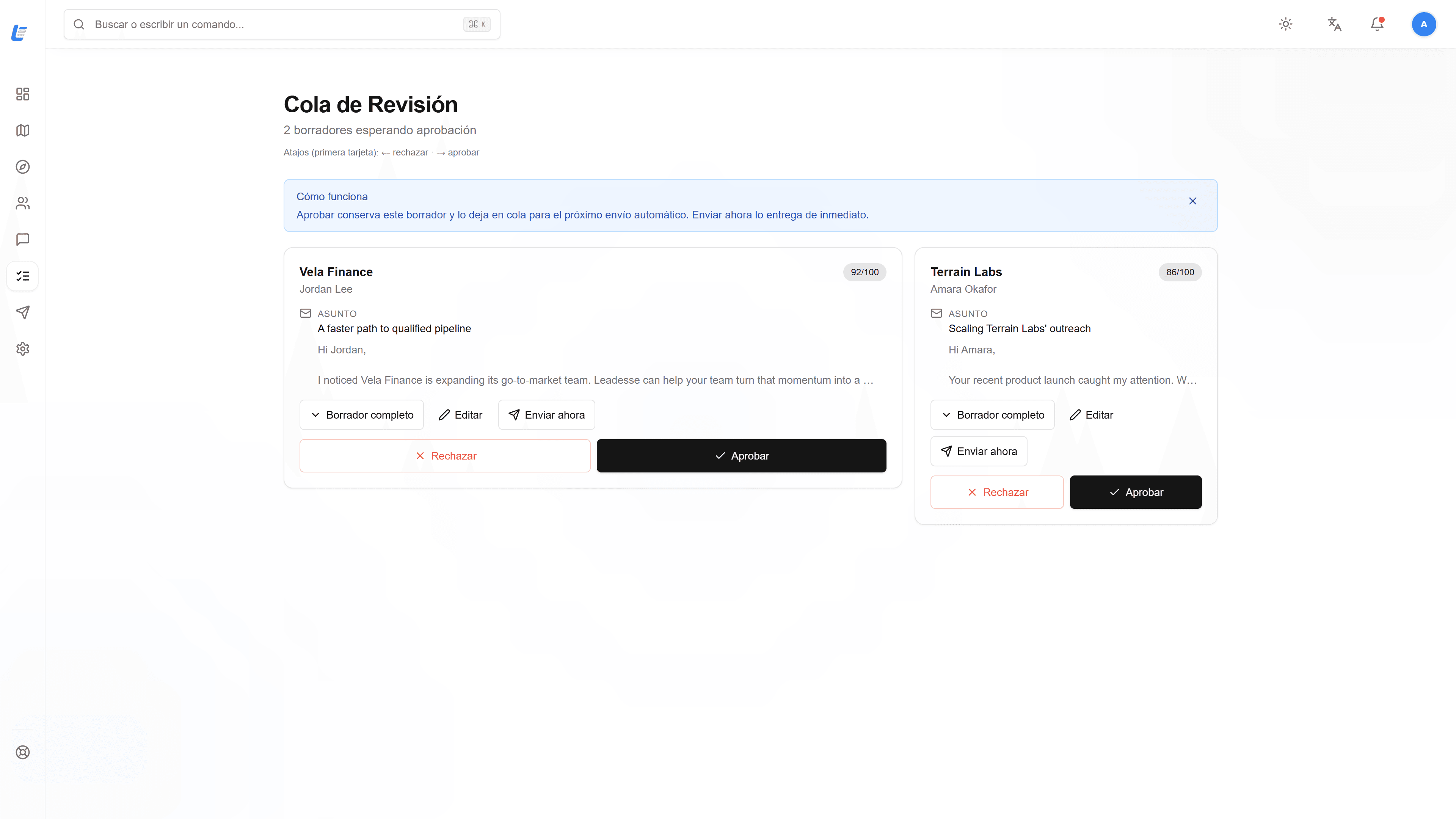
When it stops being a website. If your list of verbs includes user accounts, data being processed or decisions someone reviews, you are probably asking for a platform. Leadesse, our own prospecting product, has a review queue where a person approves, edits or rejects every draft before it goes out: that is product, not a page.
How a product like that is thought through is in making a complex product feel obvious.
Budget and dates
Give a range. It does not have to be an exact figure, but a budget range lets a studio explain which priorities fit. Our cost guide breaks down the scope decisions that affect a quote: design, content, functionality and support.
Inside that range, four things move the price: whether the design is original or adapted, who writes the copy, whether there is functionality beyond displaying information, and what happens after launch. Your brief already answers three of the four.
Timelines depend on you as much as on the studio. We will not give you a number of weeks we do not know. What we do know is where projects stop: waiting for copy, for photographs or for an approval. Ask for a schedule with the date of each of your decisions, not only the delivery date.
A date that really matters. If there is a launch, a trade fair or a season, put it in the brief. It is more useful than asking for the site as soon as possible.
What we will ask you
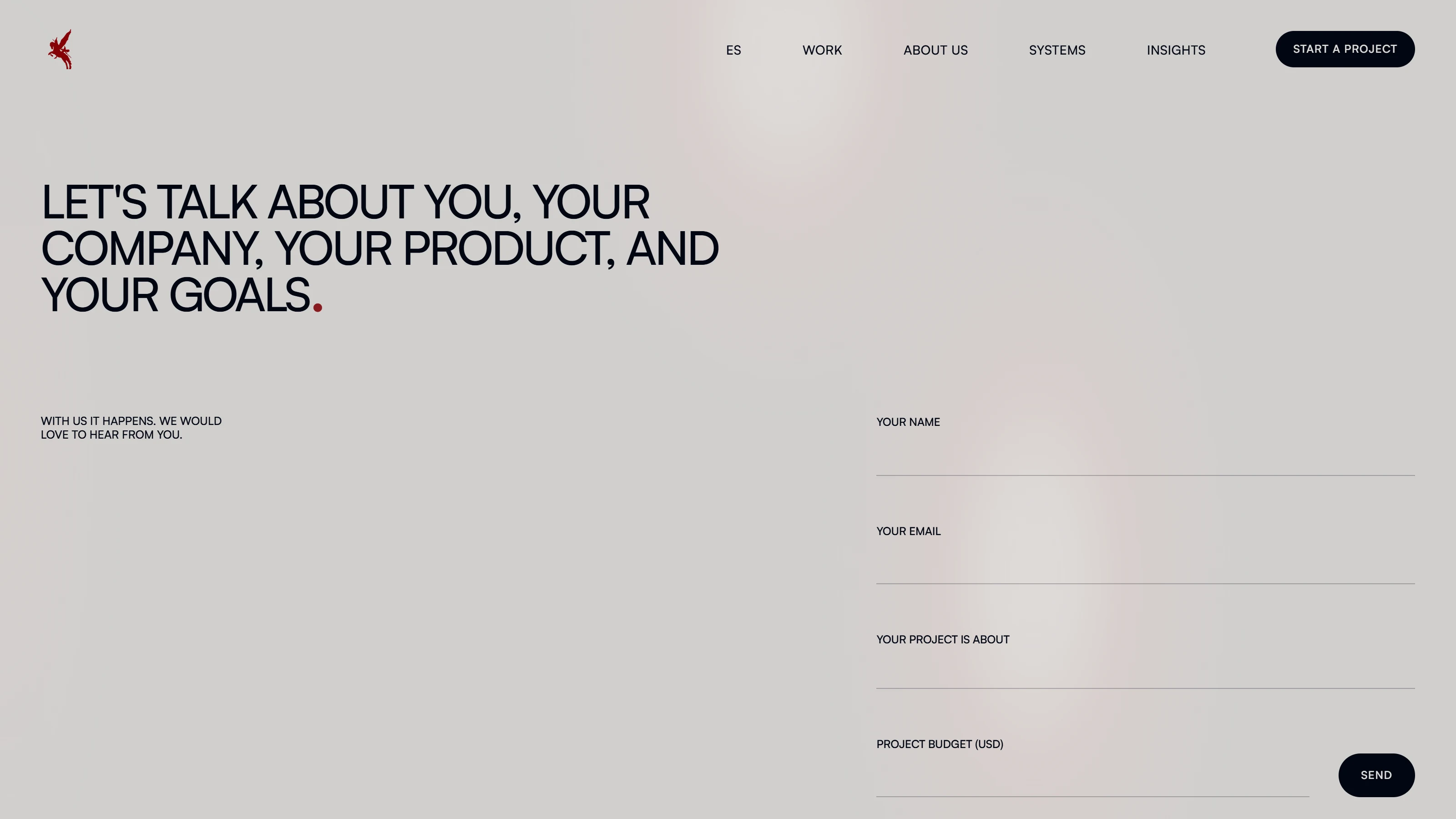
Our contact form asks for four things: your name, your email, the project in your own words, at least twenty characters of it, and the budget in dollars, written however you like. We read every message and reply with real questions.
Those questions are usually the ones in this guide. Arrive with them answered and the first conversation starts half way through:
- What must someone have understood when they leave your site?
- Who are they, where do they come from, and which language do they read?
- What already exists, and what has to be made?
- What does the site have to do, beyond explaining?
- What will you change yourself, and how often?
- What budget range, and which date matters?
And one you should ask us: which of our sites is closest to what you have in mind. They are all on the work page, with what was made and why.
The checklist, to copy
- The sentence: what a visitor has to understand.
- The audience: who they are, what they know, which device they use.
- The languages: which ones, from the start.
- The brand: a vector logo, colours and typefaces, or the decision to make them.
- The photographs: which are yours and who holds the rights.
- The copy: who writes it, and for when.
- The access: domain, hosting and the old site, and whose name they are in.
- The verbs: what the site has to do, beyond explaining.
- The editable parts: what you will change, and how often.
- The range: an approximate budget and the date that really matters.
- The references: two or three sites you like, and why, in one line each.
The last one matters more than it seems. “I like this site” does not help; “I like that the home page makes sense without scrolling” does.
Related projects and insights
Do you have the sentence? Send it to us with whatever you have from the list; we will work out the rest together.
FAQ
What is a website brief?
It is the document with the decisions a studio needs before designing: what a visitor has to understand, who the site is for, in which languages, what already exists, what the site has to do, the budget and the date. It does not need to be long. At Kavaliero it is enough to arrive with the main sentence and a range; we ask about the rest.
What does a studio need to quote a website?
Four things move the price: whether the design is original or adapted, who writes the copy, what functionality there is beyond displaying information, and what happens after launch. With those, plus the languages and a budget range, a studio can tell you what fits. Kavaliero's guide to costs gives the usual ranges in Latin America.
Do I need a logo before I ask for a website?
No, but it changes the job. If the logo exists, the site is built around it, as Nelly Morales's was, around a logo she already had. If it does not, it can be born with the site, but then the work includes a brand, with its own time and budget. Say so in the brief so the quote is realistic.
How long does a custom website take?
It depends less on design than on decisions. According to Kavaliero's cost guide, what delays a website most is waiting for copy: a project in that wait is stopped, often for weeks. Ask for a schedule with the date of each of your decisions as well as the delivery date, and arrive with the copy settled or with someone named to write it.