Paper above colour beneath.
The idea
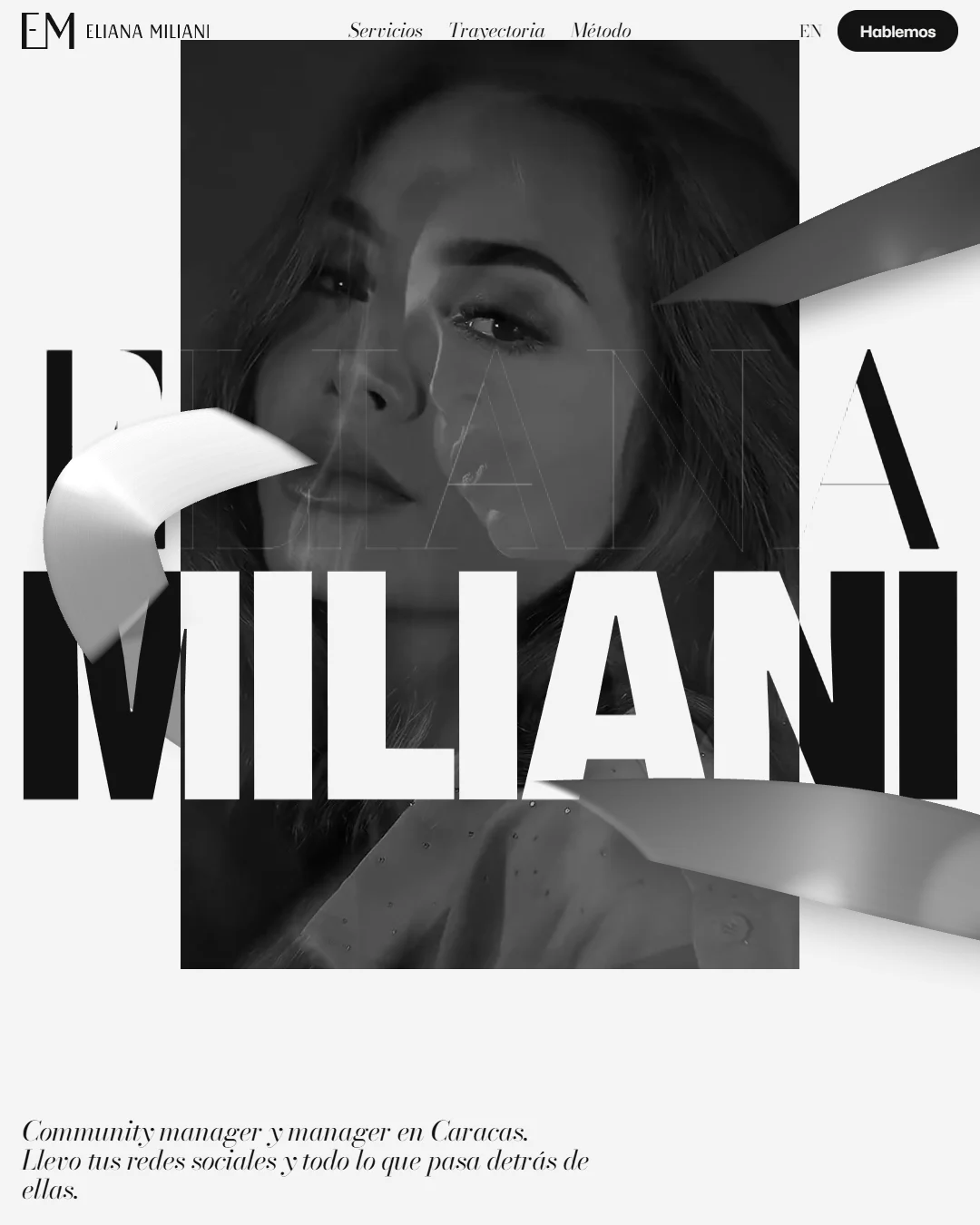
A CV and portfolio is usually a list. This one is a site with two layers: paper above, printed in two inks, and beneath it the same pictures in colour on a dark ground. There is one page, and a reader who only wants to read gets through the whole site without ever opening the layer beneath.
The build
The browser lays out a single page, and one canvas, fixed behind it, paints every picture both ways. The two inks are worked out in the shader from the same image, with no second file, and the text is inverted by a blend mode, with no script.
The canvas has a budget of 3.6 million pixels and stops drawing when nothing moves.
With the canvas off
Without WebGL, with reduced motion or on a phone, what is left is an ordinary page with native images and all of its content. On a phone the layer switch survives and still spreads out from its button. The build fails if the two languages drift apart, so all 32 pages always exist in both.
The idea
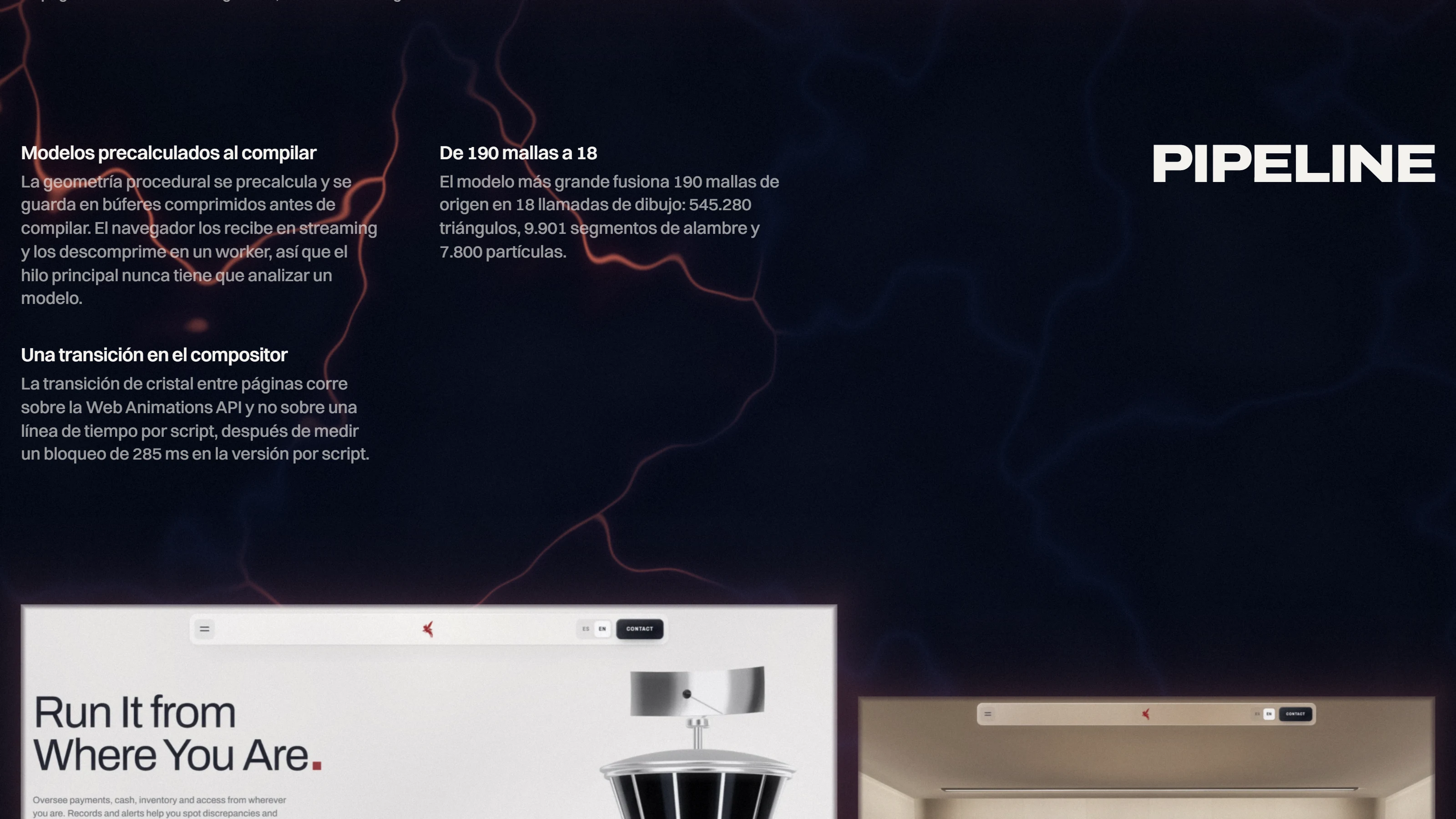
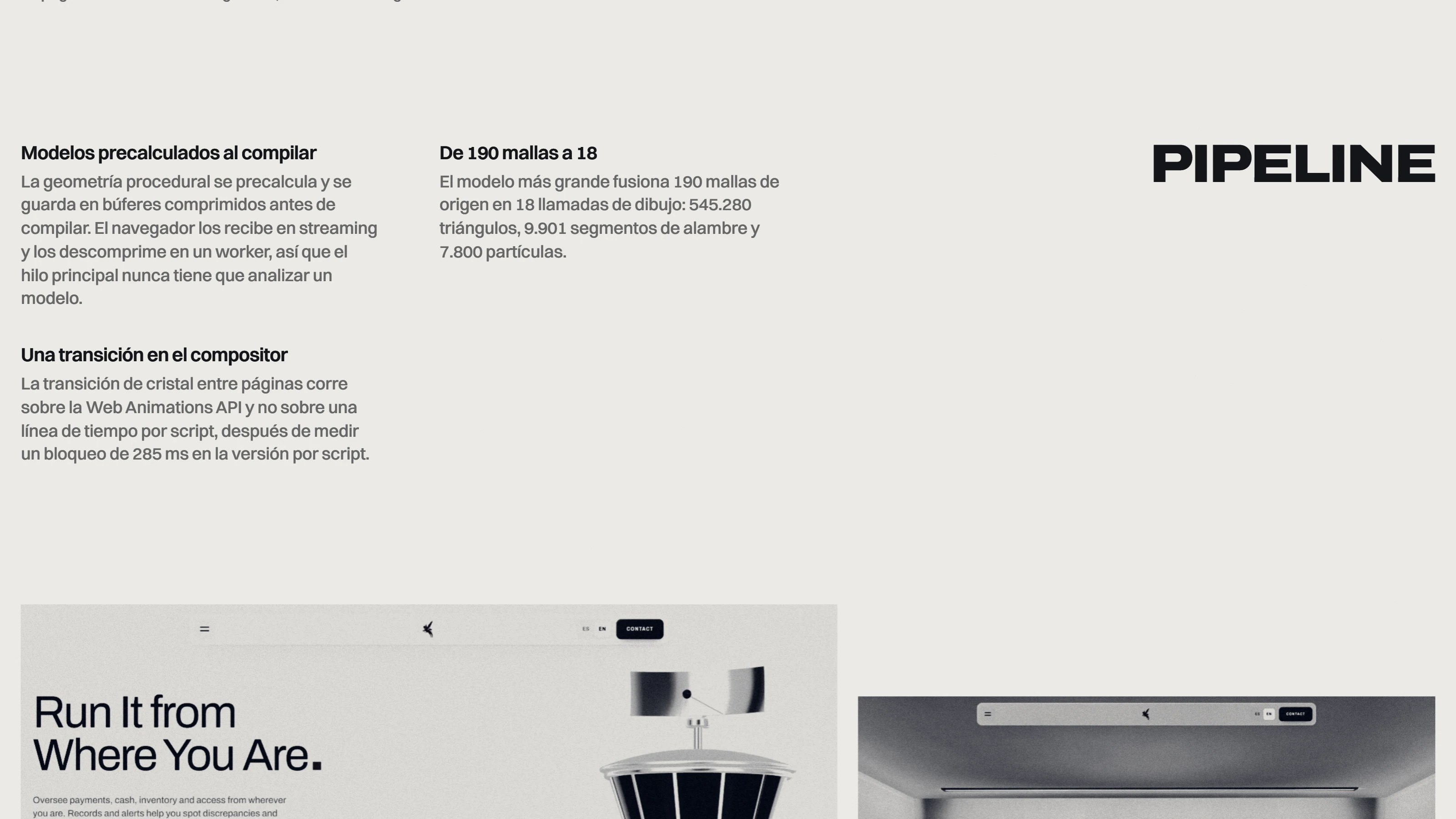
Every page exists twice: printed on paper and lit beneath it. That is not two designs, and not two sets of pictures. The browser lays out one page, and a single canvas fixed behind it paints each picture both ways. Where the paper opens is up to whoever is reading.
Three roads
The pointer leaves a trail that behaves like ink in water: a stable-fluids simulation opens the paper where it passes and closes it a moment later. A ring in the bar spreads the other layer across the whole page from the button itself, in 1.7 seconds. And a first load waits beneath, until the paper rises as one straight-edged sheet.
The index
On a desktop the index does not scroll. The mouse wheel, the arrow keys or a drag turn an endless reel of eleven covers, which settles with one in the middle. On paper it is a straight column; beneath, the same covers hang on a wheel seen from its rim, each a twelfth of a turn further round. That wheel exists only in the shader: in the DOM the boxes keep to their column.
Layout and paint
Every picture is an ordinary image in its box, with its alt text and its focus. A single canvas reads those boxes on every frame and paints the printed version or the colour one inside them; the two inks are not a second file, they are worked out from the same image. The type is white and difference-blended with whatever is behind it, so it is always the inverse, even with half a letter in each layer.
With the canvas off
Without WebGL, with reduced motion or on a phone, no canvas paints the pictures: what is left is an ordinary page with native images and all of its content. Add ?still to any address and a desktop gets that same page. On a phone the layer change survives: it still spreads from the button, over a background that is loaded only on the first tap.
More projects
Let's talk about you, your company, your product, and your goals.
With us it happens. We would love to hear from you.